




Assembly lines often lose valuable time through movements that appear insignificant when observed individually, such as taking several steps to collect a torque wrench, searching through mixed fasteners, carrying unfinished components to a distant table, returning to a central cabinet for a measuring device, or waiting while another operator uses the only available preparation surface, yet these small interruptions accumulate across every product, every shift, and every workstation. 🏭🔧 A bench type modular tool cart addresses this problem by bringing organized storage, frequently used materials, measuring equipment, documentation, and a practical working surface directly to the point where the task takes place. Instead of asking the operator to travel repeatedly between the assembly station, tool room, material rack, and inspection desk, the cart allows the required resources to move together as one compact workstation. In my experience, this is where a product such as the bench type modular tool cart creates its greatest value, because it does not merely store tools; it shortens the physical distance between preparation, assembly, inspection, adjustment, and material replenishment. A thoughtfully configured system from Detay Industry can therefore help manufacturers create a faster workflow without simply increasing line speed or placing greater pressure on employees.
Begin by Measuring Movement Rather Than Guessing
The first step should be observing the real work sequence, because a cart filled according to assumptions may become another piece of furniture that occupies floor space without reducing cycle time. I normally follow one complete assembly cycle and record every reach, turn, step, search, tool change, material refill, inspection activity, and interruption, while also asking operators which items they use for every product, which items they need only during changeovers, and which materials regularly run out before the replenishment route arrives. OSHA explains that ergonomic analysis should examine workstation layouts, work methods, tool use, material handling, line speed, repetition, force, and awkward posture, while NIOSH recommends understanding the work process, job tasks, equipment, and workplace layout before introducing an ergonomic intervention. A bench cart should therefore be designed from the actual sequence of work, with the most frequently used items placed where the operator can reach them comfortably and less common items assigned to secondary drawers or replenishment modules. 📋
I once watched an operator assemble a small mechanical unit that required only a few minutes, but during each cycle the operator walked to three separate locations for fasteners, a measuring instrument, and packaging labels, and nobody initially considered these journeys unusual because they had become part of the routine. After the team brought the materials, tools, and inspection surface into one mobile station, the work felt calmer and more continuous even before formal timing showed an improvement. The experience reminded me that workflow waste behaves like a slow leak in a compressed air line: it may not stop production immediately, but it quietly consumes capacity throughout the day.
Bring Tools and Materials to the Point of Use
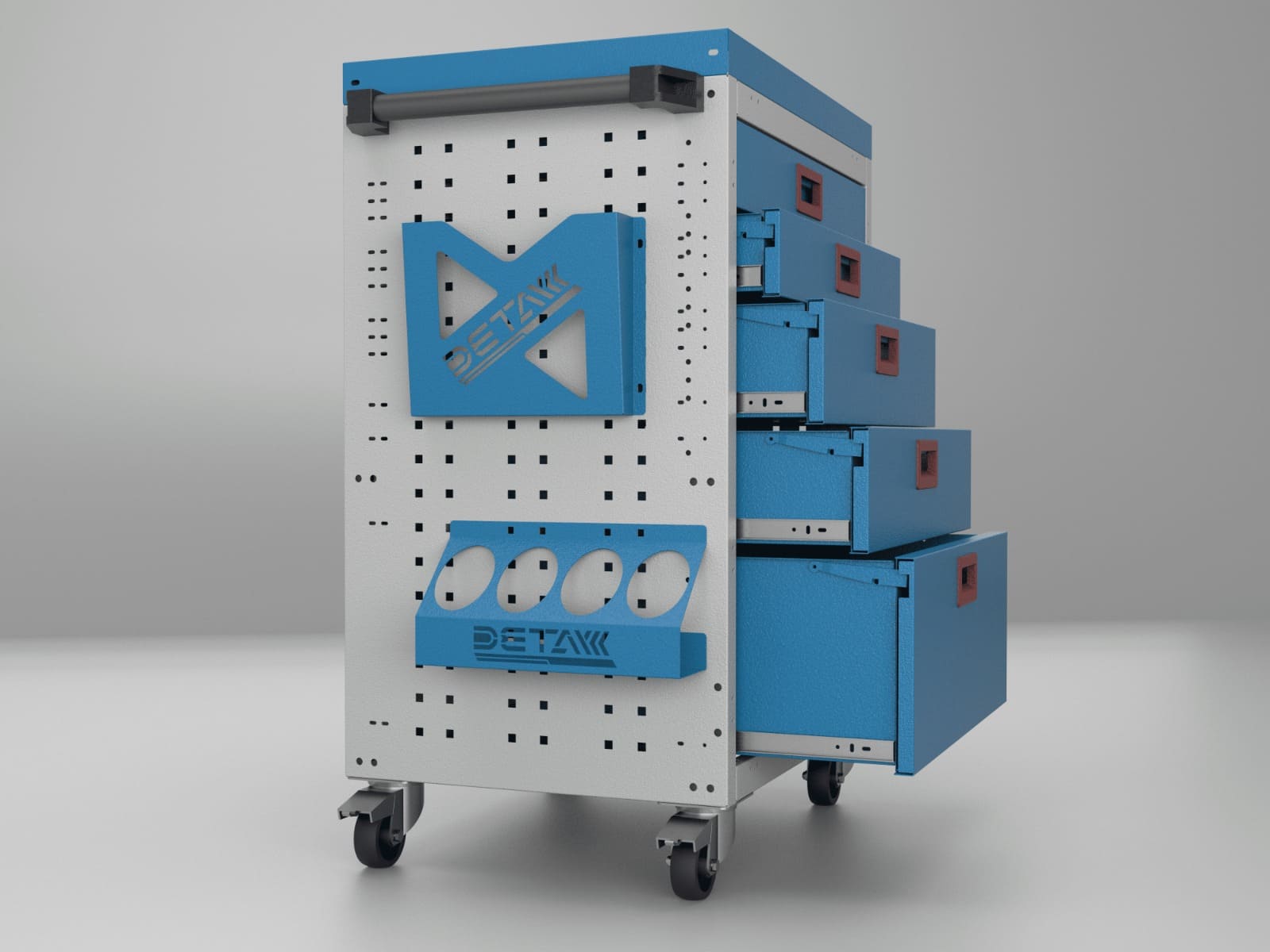
A central tool room remains useful for controlled inventory and specialist equipment, but operators should not leave the assembly station repeatedly for tools and consumables required in nearly every cycle. NIST Manufacturing Extension Partnership examples identify point of use inventory, Kanban replenishment, 5S workplace organization, setup reduction, line balancing, and visual management as practical methods used by manufacturers to improve operational flow. A bench type cart supports these methods by creating a defined point of use location that can hold standard quantities of tools, components, fasteners, gauges, labels, and cleaning materials for a specific operation or product family. The upper surface can function as a compact industrial table, while drawers and cabinets keep equipment protected beneath the work area rather than spreading it across the line. 🧰
Point of use storage should not mean filling the cart with every item the department owns, because excessive inventory can hide shortages, increase weight, occupy useful drawer space, and make identification more difficult. The team should define the standard quantity required between replenishment visits, give each component a labelled location, and establish a simple trigger for restocking. The cart then acts like a small, disciplined supermarket beside the operator rather than a moving warehouse. When materials arrive in consistent containers and the empty position becomes visually obvious, the replenishment team can respond before the operator runs out, which supports smoother line performance without creating large piles of components around the workstation.
Combine Storage and a Working Surface
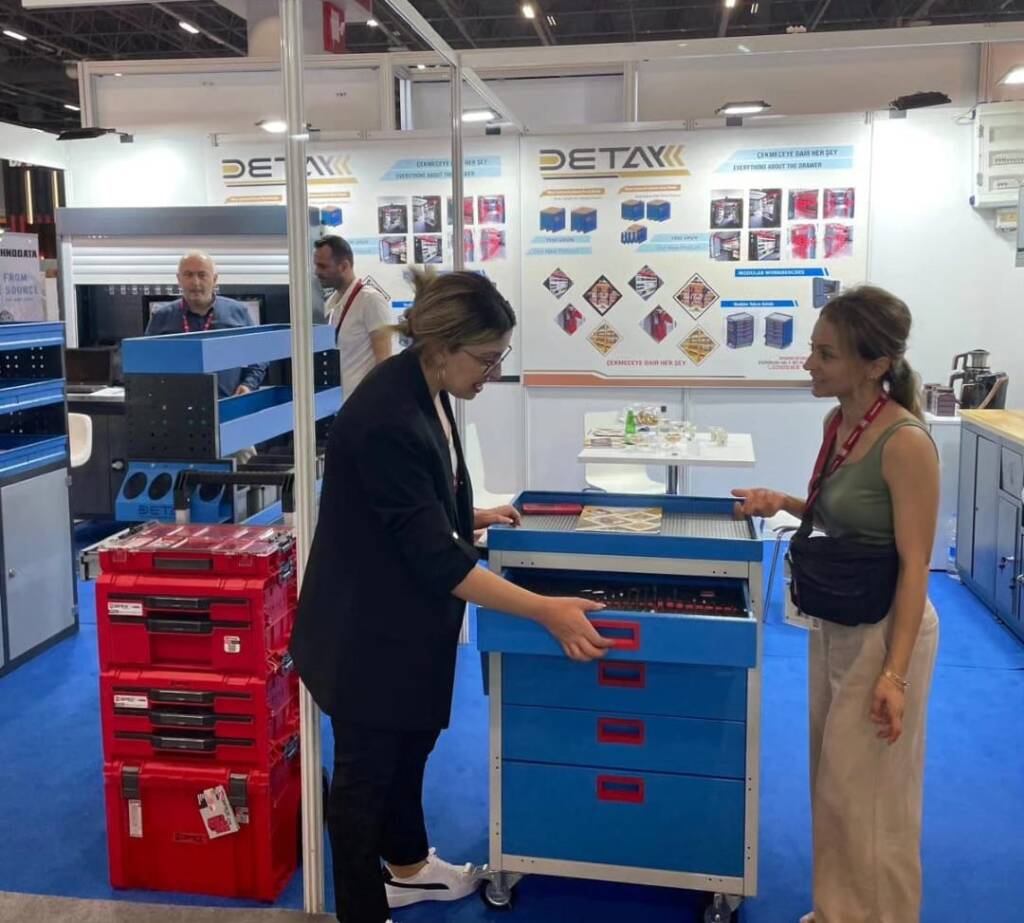
Traditional tool trolleys transport equipment effectively, but a bench type design adds a stable upper surface that can support preparation, inspection, light assembly, component sorting, documentation, or temporary placement of an unfinished product. This combination can remove the need for a separate table beside every operation, provided that the surface dimensions, structural capacity, material, and finish suit the intended task. A compact workbench on wheels becomes particularly valuable during model changes, repair loops, prototype assembly, quality containment, and low volume production, because the team can move the complete setup to the point where it is needed instead of carrying tools in several journeys.
The surface should remain intentionally organized, because a cart top that slowly becomes permanent storage will lose its value as a workstation. I prefer marking specific areas for the incoming component, active work, completed unit, measuring device, and documentation, while keeping unused tools inside assigned drawers. This simple arrangement creates a visible flow across the surface, almost like a small river moving from preparation to completion, and it also makes abnormalities easier to notice because a missing component, unfinished check, or misplaced tool no longer disappears inside general clutter. The modular configurations developed by Detay Industry can combine drawers, cupboards, shelves, holders, side panels, and a usable top according to the exact operation rather than forcing every assembly station to use an identical layout.
Configure Drawers According to Frequency, Weight, and Sequence
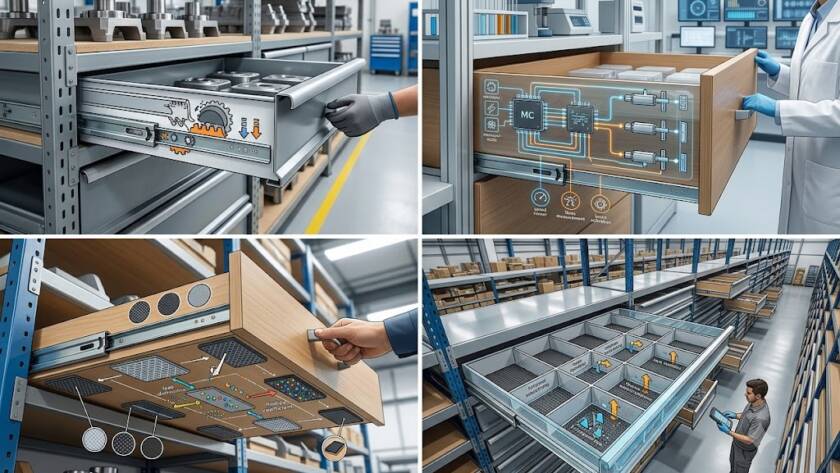
The fastest drawer is not necessarily the one closest to the operator; it is the drawer whose contents match the natural sequence of the work. Tools required at the beginning of the cycle should occupy one clearly identified zone, fastening equipment can occupy another, measuring instruments should remain in protected compartments, and final inspection or packaging materials can sit near the end of the workflow. Shallow drawers usually suit sockets, bits, gauges, markers, small hand tools, and fasteners, while deeper drawers can hold power tools, fixtures, spare batteries, and larger components when their loaded weight remains within the manufacturer’s declared capacity.
This organization follows the same address based logic used in a heavy drawer rack system, although an assembly cart carries much lighter and more frequently accessed items. Every tool should have a defined position that allows employees to identify absence immediately, and drawers can use dividers, shaped inserts, labels, photographs, or shadow layouts depending on the process. Tools should not be stacked in several layers when operators must remove unrelated items to reach the correct one, because each additional movement adds time and increases the possibility of returning equipment to the wrong location.
| Workflow Problem | Modular Cart Configuration | Expected Operational Benefit | Control to Maintain |
|---|---|---|---|
| Operators repeatedly walk to a central tool cabinet | Frequently used tools stored in labelled point of use drawers | Less walking and more continuous assembly activity | Keep only approved standard tools on the cart |
| Small components become mixed or run out unexpectedly | Divided bins with minimum and maximum replenishment levels | Faster selection and clearer restocking signals | Use a defined Kanban or replenishment routine |
| Operators lack a surface for preparation or inspection | Durable bench top with marked work zones | Fewer transfers to separate tables | Prevent permanent clutter on the top surface |
| Product models require different tool combinations | Exchangeable drawers, bins, holders, or modular panels | Quicker changeovers between product families | Use a documented configuration for each model |
| Quality problems require temporary containment | Mobile inspection cart with measuring tools and documents | Quality support can move directly to the affected station | Separate accepted, rejected, and pending components |
| Heavy drawers make the cart difficult to move | Balanced loading with dense equipment kept low | Improved stability and more predictable handling | Respect cart, drawer, caster, and worktop capacities |
Reduce Reaching, Bending, and Repetitive Handling
Faster work should not come from asking employees to move more aggressively, because poorly positioned tools can increase awkward posture, contact stress, forceful exertion, and fatigue even when cycle time initially improves. OSHA states that fitting work to the person can reduce muscle fatigue and work related musculoskeletal disorders while supporting productivity, and its technical guidance recommends minimizing material handling weight, range of motion, and frequency while providing handles that can be grasped in an upright posture. NIOSH likewise emphasizes that workstation and equipment changes should reduce unnecessary physical stress. For a modular cart, this means high frequency tools should normally remain within comfortable reach, heavy items should be placed low, handles should allow neutral control, and the work surface height should suit the task and operator group. 👷♀️
The team should involve actual operators in the layout trial, because a design that appears efficient on a computer screen may create wrist deviation, shoulder elevation, or blocked leg space during a real assembly cycle. A cardboard mockup, temporarily labelled cart, or pilot unit can reveal whether drawers collide with the operator, whether the surface is too deep, whether a holder sits on the wrong side, and whether two employees can share the station without interrupting one another. This user centered process helps Detay Industry configure the cart around real movement, product size, glove use, dominant hand, and working posture rather than relying only on external dimensions.
Use Mobility to Support Changeovers and Line Balancing
A fixed cabinet remains tied to one location, while a mobile bench cart can move between stations when demand, staffing, product mix, or line balance changes. This flexibility is especially helpful in mixed model assembly, where one product may require specialist tools that another product does not need. Instead of equipping every station permanently with the complete specialist set, the company can create a dedicated cart for the operation and move it according to the production schedule. Standardized work guidance from the Lean Enterprise Institute describes takt time, work sequence, and standard in process stock as core elements of consistent operations, and a documented cart configuration can support that consistency by ensuring the same tools and materials appear in the same positions each time the task moves.
The cart can also support line balancing when one station becomes overloaded, because selected preparation work may move to an adjacent operator without rebuilding the entire workstation. However, mobility should remain controlled rather than spontaneous. Every cart should have an assigned home position, approved travel route, clear destination, and a rule for locking the casters before work begins. A moving cart should not block aisles, emergency equipment, machine controls, electrical panels, or material delivery routes, and employees should never pull a heavily loaded unit blindly into a crossing aisle.
Support 5S and Visual Management Without Creating Decoration
Labels, drawer colours, outlines, photographs, and identification numbers are useful only when they help employees perform or restore the standard condition. A cart may look impressive after a 5S event, but the improvement will disappear if the location of each item does not match the real work sequence or if no one owns replenishment and inspection. NIST manufacturing examples show that 5S, visual management, point of use inventory, layout redesign, and employee involvement can contribute to more organized and efficient production environments, including reductions in unnecessary movement and improved assembly flow. A modular cart gives these practices a physical structure by defining what belongs at the station, how much should be present, and where each item should return after use.
The broader logic resembles well managed industrial rack systems, where locations, quantities, and access routes remain visible and repeatable. I recommend placing the cart’s identification, product family, tool list, replenishment quantities, inspection date, and responsible area on one clear information panel rather than covering every surface with unrelated labels. Operators should be able to understand the cart’s purpose within seconds, while supervisors should recognize missing tools or excess material during a simple walk through.
Select Casters, Brakes, Handles, and Load Capacity Carefully
A modular cart should move smoothly when relocation is required and remain stable when employees assemble, measure, or adjust components on its surface. The project should therefore consider the total loaded weight, floor joints, slopes, surface condition, turning space, caster diameter, wheel material, brake type, handle position, and the amount of force employees need to start, steer, and stop the unit. Dense tools and components should remain low and distributed evenly, while tall accessories should not create an unstable center of gravity or obstruct visibility.
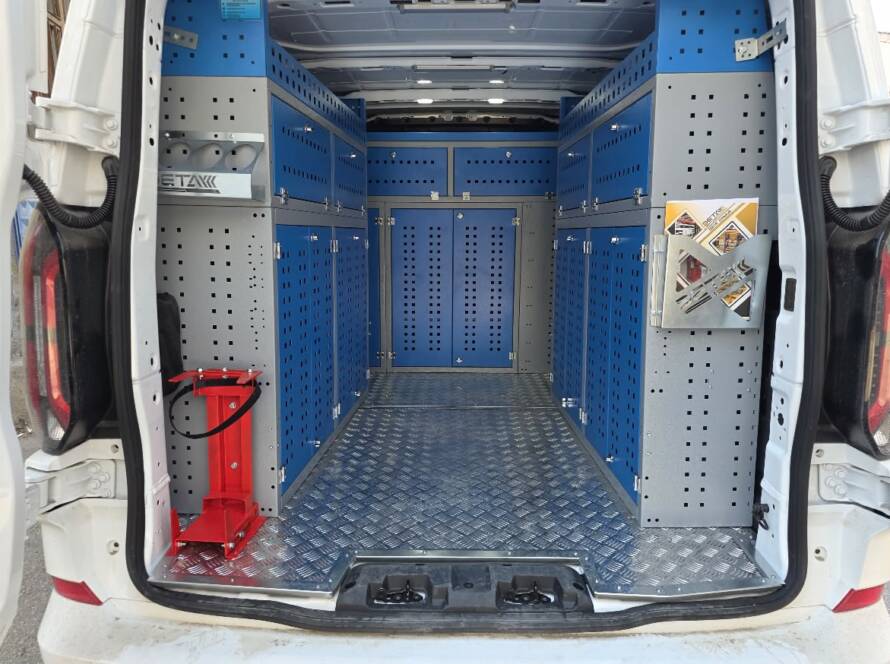
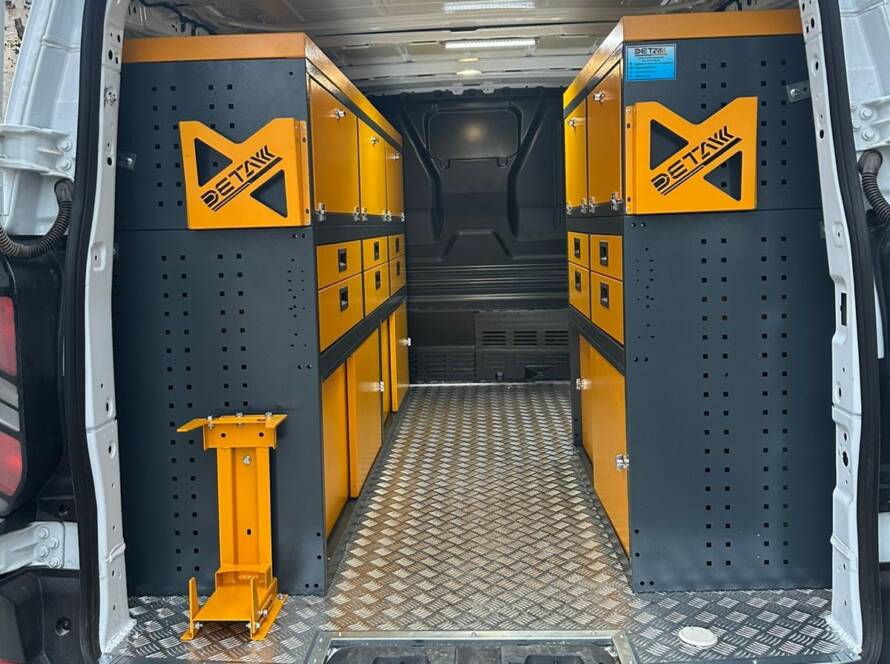
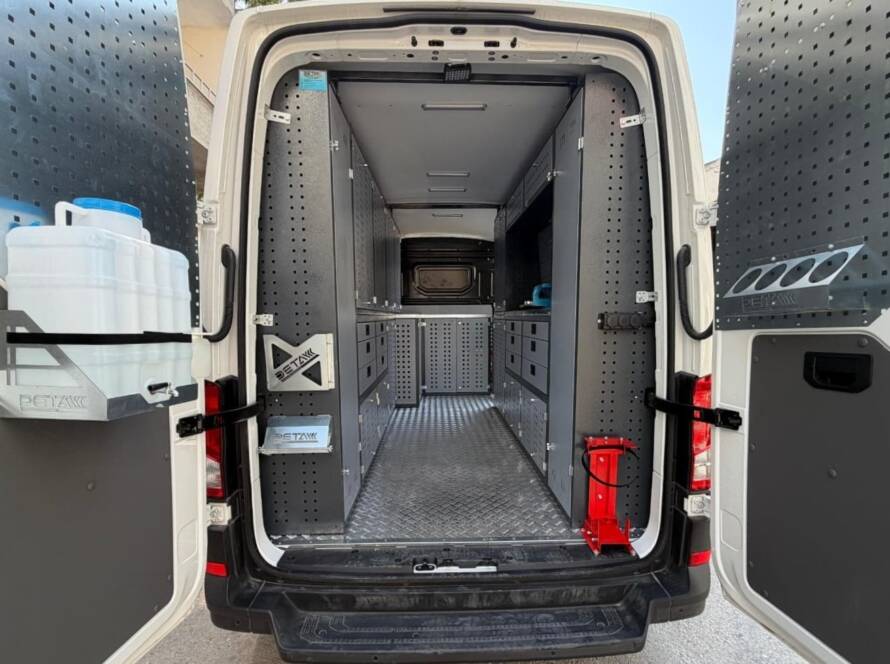
The mobility principle can be compared with organized in-vehicle equipment, where every component must remain stable despite movement, although an assembly cart and a service vehicle have very different engineering requirements. Similarly, the secure retention ideas used in an in-vehicle equipment rack remind us that tools should not slide or collide when the cart crosses a floor joint. Drawers should remain closed during movement, removable bins should have suitable retention, and caster brakes should be applied before employees use the top as a working surface.
Build Standard Carts for Repeating Product Families
One of the strongest ways to accelerate workflow is creating standard cart configurations for repeating products or assembly families. Each configuration can contain the exact tools, fixtures, gauges, fasteners, documents, and consumables required for the operation, arranged in the same positions every time. When a changeover begins, the incoming cart replaces the outgoing setup rather than requiring employees to empty and rebuild drawers during production. This approach can support setup reduction by moving preparation activities outside the period when the line is waiting.
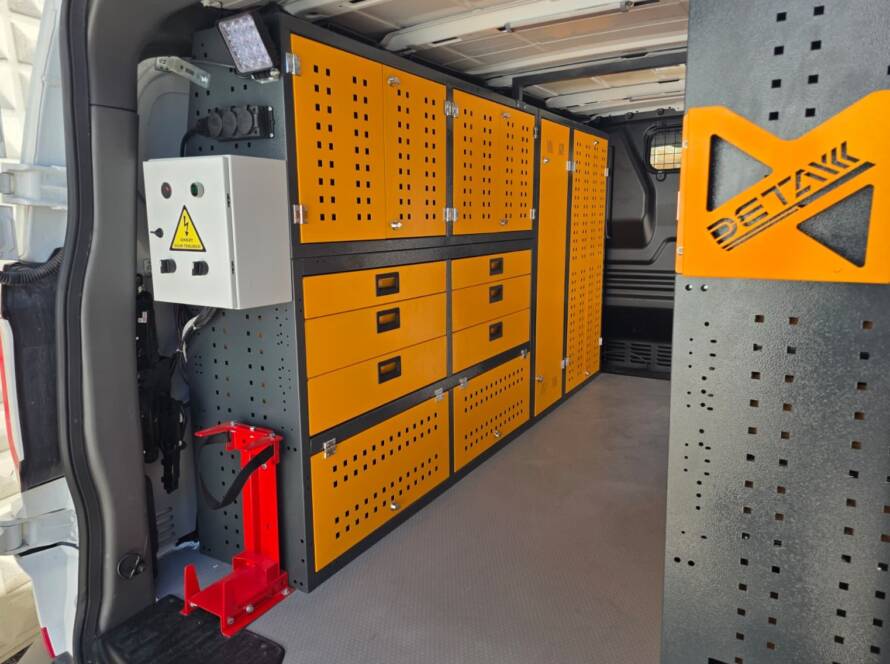
A company may also borrow organizational ideas from an in-vehicle cabinet system, where technicians receive a repeatable layout tailored to a specific service role, or from an in-vehicle material cabinet, where parts and consumables remain separated according to use. On an assembly line, this means one cart may support electrical assembly, another may carry pneumatic components, and another may serve quality inspection, while all carts follow the same labeling, drawer control, and replenishment standards.
A Practical Assembly Line Example
Imagine an assembly line producing three versions of an industrial pump. Operators currently collect hand tools from a shared cabinet, fasteners arrive in large mixed containers, measuring equipment remains at a separate inspection table, and product specific fixtures sit on a shelf several metres away. The line experiences inconsistent cycle times because each operator prepares the workstation differently, while model changes cause additional searching and walking.
I would first observe and time the complete work sequence, create a movement diagram, identify the standard tools and materials for each pump version, and record replenishment quantities. The proposed cart would include shallow drawers for sockets, screwdrivers, bits, gauges, and markers, deeper drawers for power tools and fixtures, divided bins for standard fasteners, a protected compartment for measuring equipment, document holders for work instructions, and a clearly marked upper surface for preparation and inspection. Heavy fixtures would remain in lower drawers, while high frequency hand tools would sit within easy reach.
Three removable product modules could represent the three pump versions, allowing the material handler to prepare the next configuration before the model change. The operator would lock the cart beside the line, complete assembly and inspection without walking to separate storage points, then return every item to its visible position. The team would measure walking distance, search time, cycle variation, missing material events, ergonomic concerns, and quality findings before and after the pilot. This structured trial would allow Detay Industry to adjust drawer depths, worktop size, holders, caster selection, and module positions before the cart design is repeated across the line. 🚀
Connect the Cart with Maintenance and Tooling Areas
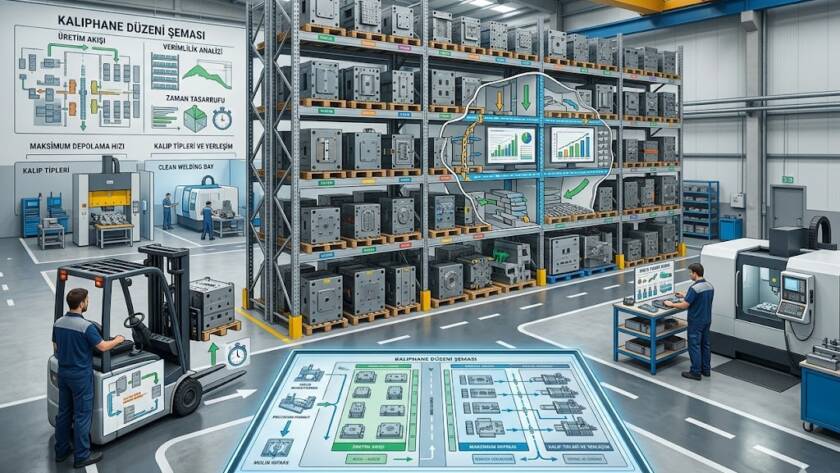
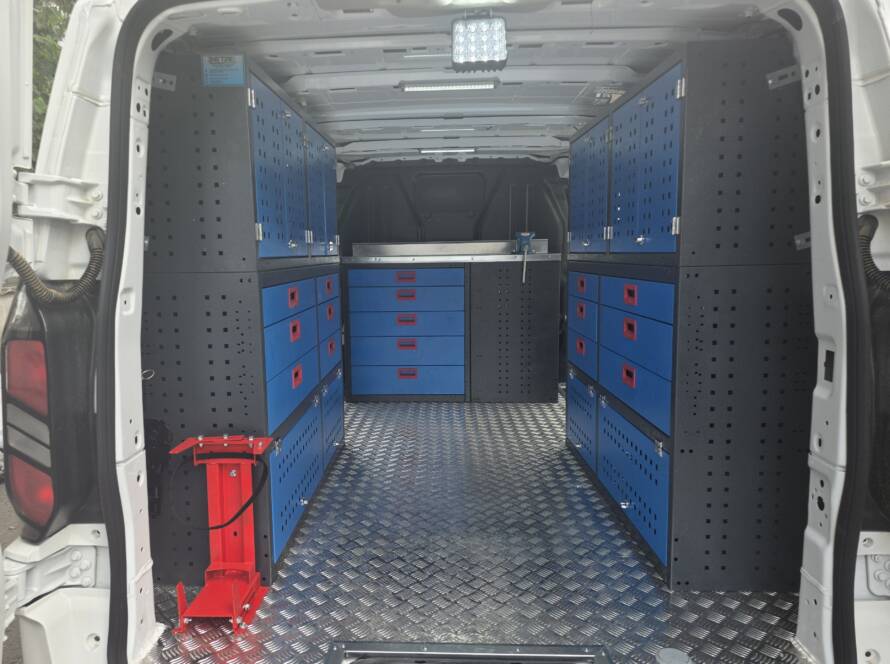
Bench carts do not need to remain limited to final assembly because they can also support maintenance, tooling preparation, repair loops, and changeover teams. In a mold shop, for example, a cart can carry lifting accessories, cleaning equipment, inspection tools, connectors, and documentation between the storage area and the molding machine. When positioned beside a drawer mold rack, it can provide a controlled surface for preparing accessories without placing loose items on the mold drawer or floor.
The cart should still have one defined purpose at a time, because a unit that becomes shared by assembly, maintenance, quality, and logistics without ownership can quickly become disorganized. Clear assignment, standard contents, regular review, and responsible replenishment preserve its value. Modular construction makes adaptation possible, but every change should follow an observed need rather than the temptation to attach another holder simply because space remains available.
Measure the Results and Improve the Configuration
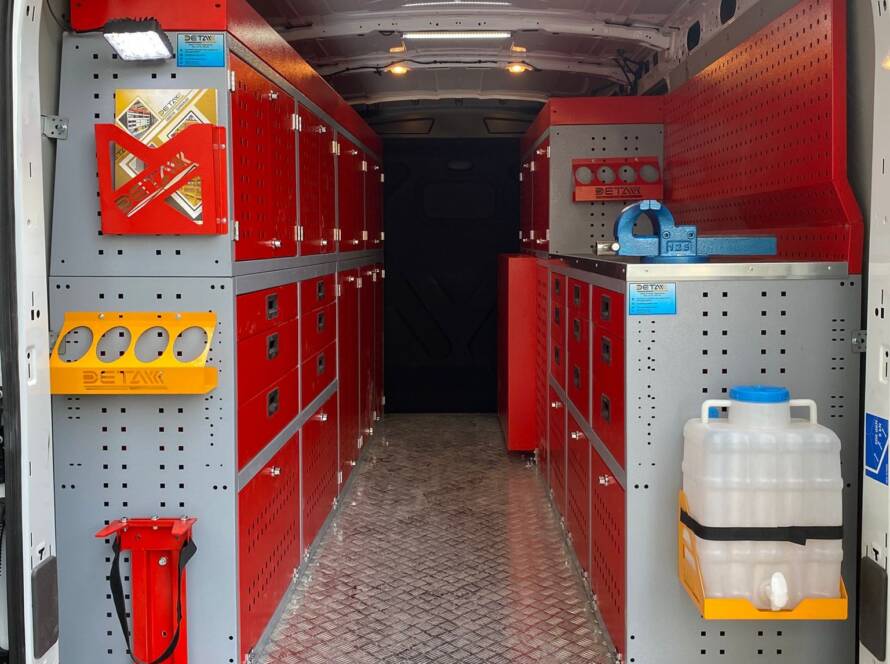
The success of a bench cart should be measured through operational evidence rather than appearance. Useful indicators include operator walking distance, average search time, cycle time variation, changeover duration, missing material interruptions, number of tools outside their assigned locations, quality defects related to incorrect tools or components, replenishment reliability, and reported ergonomic discomfort. The team should compare the same product and working conditions before and after implementation, then involve operators in reviewing what remains inconvenient.
I recommend checking the cart after the first week, first month, and several production cycles, because items that seemed essential during planning may never be used while unexpected tools may appear on the surface every day. Drawers, casters, brakes, handles, locks, worktops, labels, and structural connections should also receive routine inspection. The strongest configuration is not the one that never changes; it is the one that changes through controlled learning while preserving safety, standardization, and clear ownership.
Conclusion
Bench type modular tool carts can accelerate assembly line workflow by bringing tools, materials, measuring devices, instructions, and a usable work surface directly to the point of use, reducing unnecessary walking, searching, carrying, and workstation rebuilding. Their real value comes from careful process observation, ergonomic positioning, standard drawer configurations, controlled point of use inventory, dependable replenishment, visual management, suitable caster and brake selection, and regular performance review. 🌟 I see a well planned cart as a moving piece of standardized work, because it carries not only equipment but also the intended sequence, quantity, and organization of the operation. When manufacturers design the cart around actual operator movement and production data rather than simply filling drawers, Detay Industry can help create assembly lines that feel more continuous, more organized, and easier to improve without sacrificing safety or quality.